Tuesday, 4 February 2014

Pallets 101

Today we got a garden/porch chair. It didn’t cost us a thing, bar some screws. I made it from pallets. Lots of this going on at the moment and the internet is full of spectacular things made from them. Some big some small but all great. I even found a man who had covered his allotment in them then used plastic bottles to increase his production space with vertical gardening. Whilst there are lots of ideas there isn’t a lot of info on how to get from pallet to creation. I’ve put some of my creations on before and I’ll try not to repeat too many. Rather than set of instructions on how to make something I thought I’d go for general things I consider when thinking about a pallet project.
Today's creation

Rabbit run in progress

       Quality of pallet. Is it even worth picking it up? If it’s smashed to bits, rotten and generally falling apart then my advice, unless you’re planning a bonfire, don’t bother. It will simply sit in your garden/shed rotting further and taking up space.

       Treatment. Some pallets are treated with some unpleasant chemicals to preserve them. Don’t use these indoors or for chairs, play equipment etc. Use them for gates, fences and things people won’t be spending a lot of time on. Look for heat treated ones for “people used” items. You should be able to find a HT on a spacer to tell you if it’s been heat treated.
Seating area. Looking for a fire pit for the center

       To cut or not cut. Can I make what I want without cutting it up? Pallets are generally very strong. Think about their original purpose. If you start butchering it will it loose its integrity? If you go for cut, where will you cut? I generally try to keep the spacers on if I’m going for this.


Dining Table. No cutting required.

Work top. Butchered another pallet to fill in gaps.

  Pull it apart. The trickiest part of adapting a pallet for further use. Sometimes they come apart like a dream, leaving you with 10-15 planks of wood where what you make is limited only by (in my case) skill and imagination. There are several videos on you tube. I go for a combination of masonry chisel, hammer and crow bar to “gently” prise apart rather than the smash the end technique as it leads to more splitting. Sometimes you simply have to give up on a pallet and cut it instead and use smaller pieces joined together.
No right angles allowed mirror.
Window boxes. Ready for summer.
Chicken house.
Number one rule. You need to be adaptable. You probably won’t be able to make the item you’ve found on the net. You won’t have the same size and/or type of pallet.
Bathroom mirror


Pedestal 
 Yours will split when you try to screw them together. The planks will break when you try to pull it apart. Yours will bend and warp. Believe me I’ve had all these problems and more, sometimes resulting in tool throwage! My biggest problem is forgetting the number one rule. But, this is the joy of pallets. Your creation will be unique. No one will have one quite like you. If you want one like everyone else, go to Ikea! Who wants to be the same as everyone else?


What have you made from pallets? Share in the comments below.

Thursday, 30 January 2014

Pork Preseves

Well it’s snowing outside so a perfect excuse to down tools for a while and write the next post. This one’s about putting longevity into your meat. There are several ways of doing this and we’ve had a go at lots this year. So, in order of success.
Wet cure – A wet cure is simply putting your meat into to a brine solution for an allotted time and then hanging for a week or so. You can add all sorts of weird and wonderful things to your cure from beer to coke. It’s the first time we’ve done this so I kept things simple. Just salt and water. All was going well until it got warm and damp here weather wise and the temperature in our normally freezing cold storage room shot into the early teens and we lost just over half our wet cure meat. For the most part not too bad but the biggest blow was the two hams. Any that wasn’t too gone off was rapidly boiled up for the dogs so they were quite happy about it!
The brine bucket


Curing nicely


Profiting from disaster


“Canned goods” – By this I mean the things we cooked up and put into parfait jars. This year we made: Rillettes, which is a bit like a coarse pate, the meat is salted, shredded then cooked in its own fat. Rillons, like the rillettes but using belly meat and it’s kept in chunks and cooked in wine first, very nice. Finally confit, which really is just chunks of pork, salted over night then cooked in lard and it’s delicious!
Rillons.Yum


Stored rillons.Yum yum!

Rillettes cooking away.

Nicer than Intermarche!


Saucissons – These are air dried sausages. Essentially you make a salty sausage mix and hang to dry until they go hard. The flavour improves with time so the longer you can resist temptation the better. We made two types, a plain one and a sort of chorizo flavoured one with lots of garlic and paprika. Both are very good and are a real success this year.
Mincing!

Errrrrr
Ummmm?


Hanging out.
Dry Cure – Easiest to do and our most successful. Simply rub salt into the meat each and drain off any liquid that comes off. In the case of the hams I set up a box with holes in it to allow the liquid to drain and covered the meat in salt. Again you can add things to your salt mixture to add flavour. I did some bellies adding in sugar, pepper, bay leaves and juniper berries to make a sort of pancetta. We also had a go at lonza and coppa which are entire muscles kept whole and given the salt treatment.
Bellies getting a salt rub. You pay good money for that at a spa.


Ham going into a salt storage

Next time there will be more dry curing and “canning” as these were by far and away the most successful methods. We did also fill one and a half freezers and cook a whole shoulder a couple of days after butchery, which was slowly consumed over about a week in a variety of leftover pork dishes! Starts all over again this spring as the hunt now begins for two more piglets for chez Powell. Oink oink.

Mmmmmmmmm.


Saturday, 18 January 2014

All brawn and (this time) no brains!

Despite a promise that I would knock these pig related posts out quickly I haven’t done so. “Why?” I hear you cry in despair. “We want to see more meat processing. We want to be aware of where our food comes from.” The weather is pretty much the reason. It has been unseasonably warm here in the Correze. This has meant more work outside,  both here and job wise. I was picturing months on end stuck indoors with snow mounting up outside. This has not been the case.

So on with piggy processing. Day 2 was butchery and some offal processing. As far as butchery was concerned I did lots of you tube watching and came up with a plan for how to carve them up. Lots of joints for roasting, lots of mince for sausages and sausisson, head and feet for brawn and a whole range of odd and sods for curing and cooking.


Rolled belly.

Chops, loin roast and a bit of bacon


Offal wise. Liver went in pate using Ray’s Liver Pate recipe from River Cottage Meat. Hearts are being saved for a favourite of ours, devilled hearts on toast.


Pate


 The left over liver went in with kidneys to make a sort of haggis/faggot concoction which we can’t decide whether or not it’s a haggisy faggot or a faggoty haggis!


Wrapping a big "Haggot" in caul fat


Finished little ones


Finished big one.


Look at all that meat. Scandal that this is often thrown away
The much under used heads (Minus the cheeks which were removed and brined to make Bath chaps) went into a pot with a couple of trotters to be picked over and pressed into the resulting gelatinous stock to make brawn. This is a sort of pate/terrine, very popular over here but all but forgotten in Britain. Probably because we don’t like to be reminded that our meat was once an animal with a head. Quite happy to eat it all mashed up in a cheap supermarket/fast food burger though!

Hello there!

The finished Brawn.


Tuesday, 10 December 2013

One giant leap for self sufficient kind.

The last week and a half has marked somewhat of a milestone in life here at Chez Powell. The pigs went to slaughter and we’ve been processing pretty much every day since. Rather than try and cram all of this into one post I thought I’d break it down a little. This also means that I am now “committed” to writing a couple of posts in relatively (for me!) quick succession
Summer running
The last supper
Of course, if you want to eat pork, first of all you need to kill a pig. At least you do if you haven’t gone out to the supermarket to buy it. Before this you need to rear it and look after it. We’ve tried to keep our pigs as humanely as possible. They’ve been kept outdoors and their food was a mixture of bought from our local mill, which is organic and all locally sourced, and veg garden waste. Their pen surrounded an old lime tree to give them shade in the sun along with their pig ark for sleeping and rain/snow protection. I think that even if you don’t have the opportunity to rear your own pigs you should at the very least demand more humane standards from your supplier. A common complaint about pork reared this way is that it is too expensive for the “average” family to afford. In answer to this I say, don’t buy it then. Forgo it this week or month and get some as a treat. In western society we eat too much meat and perhaps if we ate less the welfare of our animals would improve.
Day one of our processing was slaughter. I felt it was important to go with them and I was there when the final deed was done. I felt that it was part of my responsibility to the animals to see it through to the end and make sure it was done properly. Which it was and was done very quickly.  Other than being somewhere a bit new I don’t think they pigs knew much about it. It’s an odd mixture of sad to see them go, a realisation that such a big animal is going to die to feed you but proud that a massive step has been taken in self sufficiency and the knowledge that we gave them the best care we could (certainly a lot higher standard than your average supermarket pig would have had). Once you have a dead pig that isn’t the end. You need to drain the blood and remove the hair and top layer of skin. This was done with blowtorch, scraping and washing as we went along. The guts were taken out, which we kept, and the pigs were sawn in two.

A census pig tried to test me once!
 The plan here is to use every bit of the pig for something, so, the end of day one was actually spent dealing with some of the bits that go off the fastest. This included; soaking the caul fat (a layer of fat around the stomach used for wrapping things like faggots in water, attempting to wash out the intestines and knocking up some spiced liver for tea. (No fava beans or Chianti though!)


Dracula's midnight snack


Number one of these is the blood. The last two to three hours of the day were spent making black puddings. Essentially what you do is mix the blood with sautéed onions, fat, cream, breadcrumbs, salt, pepper and then pretty much whatever else you want as flavourings. We kept ours simple this year throwing in a few spices only. Then you fill some casings and simmer for a bit. 
Stuffing the pudding!
The most difficult part is filling the casings. After it took nearly two hours to make twelve and we lost three when they exploded in the water we decided to simplify things by cooking it up as a “cake”. This was then sliced up and put in the freezer in breakfast portions.  As the next day was going to be spent butchering four sides of pork and it was now nearly two in the morning the bed did call.
Before......

.....after

One happy customer

The biggest disappointment of the day were the intestines and stomachs which I just couldn’t clean out and they kept splitting. Spilling their contents all over the bath! However I read about the old cabbage trench that British farmer/smallholders used to use before the world went all squeamish about dealing with waste. They would dig a trench and everything would go into it. Urine, poo (human), chicken and rabbit inners etc etc. At the end of the year this would be covered in compost and the following spring the cabbage break would be planted on it. Inspired by this our inners started off the new compost heap with everything from this year’s heap that hasn’t broken down yet on top of them. This heap won’t go on the garden until Spring 2015 so plenty of time for it to break down and release all those nutrients into the compost.

Next post, Days 2and 3: Butchery and offal (Yum yum)

Friday, 8 November 2013

Lest We Forget

One of the things I was surprised to miss last year was Remembrance Sunday and November 11th. So this year I thought we would do a little something this weekend. It’s not a lot but we feel it’s important to teach Isaac about it and what it means. I know this year he won’t really get it, but just to let him know what it’s about and that it is part of his culture and history. All his great-grandparents played a wide range of roles in WW2, serving soldiers, military soup kitchens, land army and making Mosquitoes for the RAF. His granddad Powell was in the army serving in Northern Ireland and Cyprus. I also do some work for a charity, The ReOrg Trust.  who work with veterans from the British Armed Services. We’re looking forward to teaching him about it and I hope he continues the interest in military history I have. We seemingly mark the day in Britain with more ceremony than France, although I’m not sure if that is due to the region we’re in.

The Correze had a very strong resistance presence during WW2 and you can find small monuments all over the countryside with two or three names on, marking where resistance fighters were found and shot on the spot. Sadly, like all villages across Europe, even a small place like Viam has a memorial with far too many names on it from WW1. Our nearest town, Bugeat, has a plaque on the hotel de ville (mayor’s office) listing the names of Jews from the town who were deported to concentration camps and never returned. Just outside Limoges is also the town of Oradour-Sur-Glane. A small town where, on the way up to fight back against the D-Day action, a SS division walked in one morning and killed everyone. Men were marched in the woods and shot, women and children locked in the church which was set on fire, grenades were thrown in and shot if they tried to escape. Perhaps the memory of WW2 is still too raw in a different way to the experiences of Britain and the Allies.
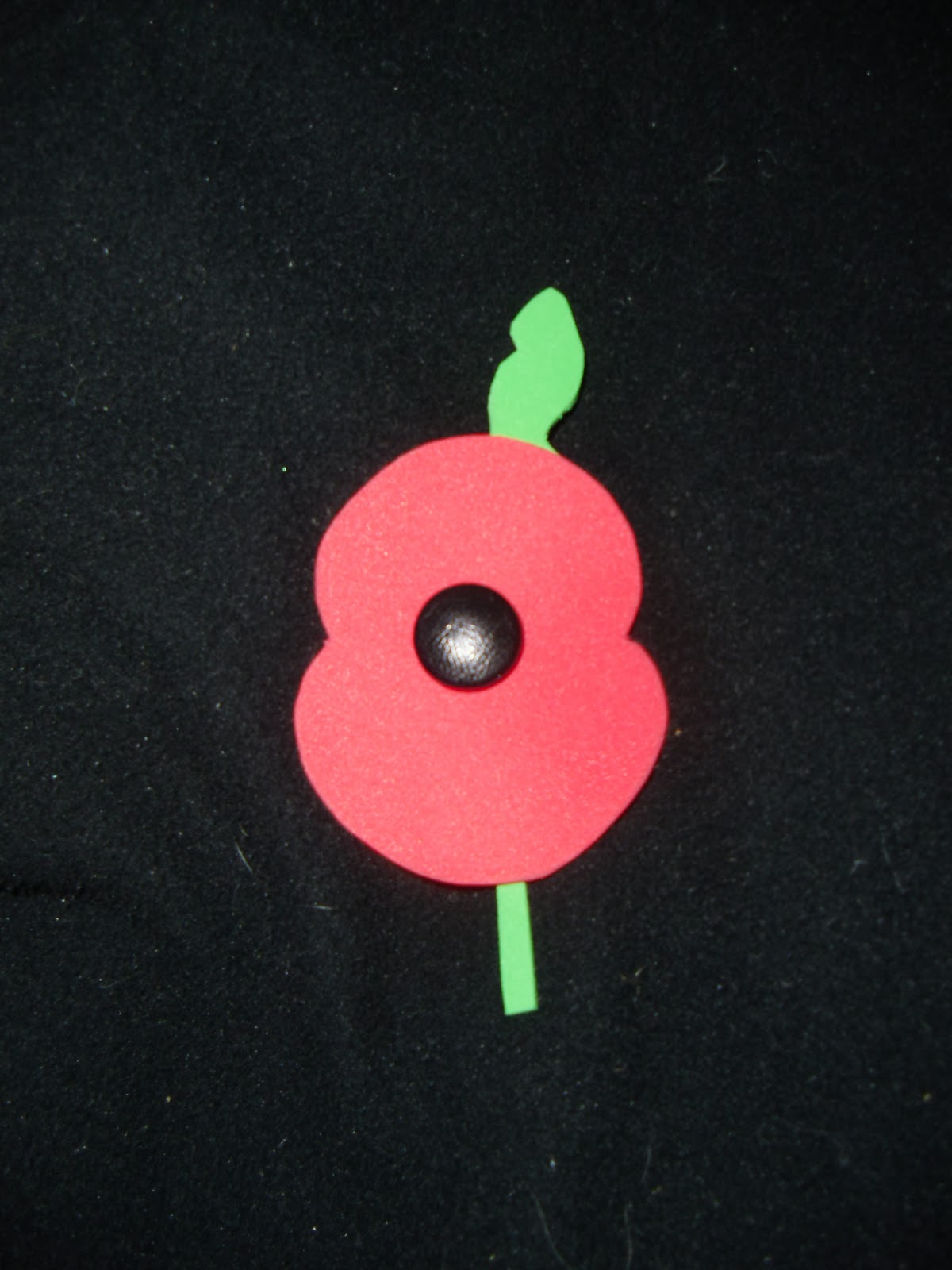
To mark it this year I have tried to explain to Isaac why he has a day off school on Monday (Nov 11th) and we coloured in a poppy. I have made one from craft foam to wear at rugby on Sunday which he “helped” with. 


 The button in the middle belonged to Michelle’s nanny Nellie who worked in the docks and lived in Southampton during the war which was very heavily bombed. It was also an important part of Britain in the run up to D-Day so I’m sure she would have seen the build up. I think he understood a little. I explained that war is bad because lots of people die and that “once upon a time” there was a very big war where lots of people died but in the place where they did, lots of poppies grew afterwards. So, we wear the poppy to remember them and the people who died/die in other wars all around the world. When asked why do we wear the poppy he replied “...because people died and we stopped the soldiers and things” I think he gets the idea if not exactly what it’s all for. We’re going to play the last post on Sunday so he can hear it and, like his daddy, he’s got quite a good memory for music. Hopefully this will help as well.


Unfortunately people are still dying in wars all over the world. Whatever your political stance is on involvement or non involvement, (By this I mean our choices on when and where to “intervene”)  I think you should still remember the men, women, children and animals who die in them. My hope is that one day we (the human race) will look back and learn from our mistakes. It is only by reminding future generations of what it has cost us can we achieve this. In many ways war destroys lives including those who survive them. We will take Sunday and Monday this year as an opportunity to think about those who died for our freedom, those who continue to die for “other reasons” and those who survive.


Please check out the ReOrg Trust  http://www.thereorgtrust.org/ Contact them if you can help or if you/anyone you know could benefit from their unique service. They do fantastic work, here's their a bit from the website explaining, far better than I can, what they do.
The Re-Org Trust provides servicemen and veterans the opportunity to experience sustainable living. Unlock your military skills with “Fresh Air Therapy”. Our Mission is to provide assistance to both current and former Service Personnel who, for whatever reason, may be in need of “support through transition” helping them to re-adjust and resettle into the wider community. The Re-Org can address the issues surrounding homelessness, mental health, offending behaviour and drug/alcohol misuse whilst giving new skills and opportunities.

Monday, 4 November 2013

Bread. Bread. Bread. And one mention of beer!

Although we went off track a little this summer, we make all (well, nearly all, this is France after all and the boulangerie is only 5min down the road!) our own bread. This autumn sees the return of a favourite of ours, sourdough. This can be the ultimate in thrifty bakery as you only need to buy flour because the yeast comes from the air around you. This also means that everyone’s is slightly different as the mix of microbes in the air varies a great deal place to place, year to year, season to season, even room to room. The principle is exactly the same as shop bought yeast. They use the sugars in the ingredients (flour, sugar, honey etc depending on your recipe) as food and produce carbon dioxide as a waste product which, if you have gluten and have kneaded your dough properly, makes your bread rise. Being wild, the yeast in a sourdough isn’t as controlled as shop bought and produces a whole load of other chemicals as well. Mostly weak acids which account for the sour taste of the bread. Incidentally this is also how Belgian brewers make lambic beers. In Brussels, the Cantillon brewery simply open the windows to start the fermentation of their beer. The resulting beer is amazing, especially after they then age it in barrels with fruit.
So how do you make it? It’s very simple. We use the instructions laid out in the River Cottage Bread book (As with all River Cottage stuff I can’t recommend it enough). Get yourself something to keep it in. We got an earthenware jar from the local charity shop.
 Mix 150g flour (wholemeal is best as it contains more food for your new pets) with 250ml warm water, beat it and leave until it bubbles and starts to smell. This will take about a week, depending on conditions. After this put the same flour/water mix in again. This is now a daily/every other day task. Take half your mix and put in your bread recipe instead of yeast. Feed it again with the flour/water mix. Done!

Your bread will take longer to rise but this actually makes it easier to fit in to your daily routine as you can leave it nearly all day to do its thing. A simple method is to knock up a “sponge” the night before. Half your recipes flour, all the liquid and one or two ladles of your sourdough mix. In the morning before work/school etc add the rest of your flour the salt and the extras (fruit, nuts, fat seeds etc) Knead. Leave to rise. Knock back and rise again as many times as you have time for. (At work all day? Leave it somewhere slightly cooler and leave to rise until you get back.) Prove. Bake. Cool. Eat.
Your starter can be added to any recipe containing flour and liquid. We’ve put in pancake batter, scones, cake. Next time we have Yorkshire pudding/toad in the hole it’s going in that too. It’s better if you can leave it for a bit for the yeasts to ferment a bit. We make our pancake batter the night before for example. But if you don’t have time to do this it will still add to the flavour and make your chosen cake/scone/crumble taste better.

You can give a starter to a friend as a present. A couple of ladles of yours in a nice jar with some instructions would make a different pressie for someone.